


Two Easy Ways to Start Earning Rewards!
Become a member today! Members-only pricing and offers, personalized care notifications, Vital Care points back on every purchase and more!
 Become a credit card member today!
Earn 2X Pals Rewards points at Petco
when you use Petco Pay!APPLY NOWLearn More About Petco Pay Benefits
When to Replace or Throw Away a Dog Bed
Published on May 13, 2026
Updated on May 13, 2026


Written by Elizabeth Anderson Lopez
Identify signs you need a new dog bed with this helpful guide. Ensure your dog gets the support and comfort they deserve every day.
A clean, supportive dog bed is more than just a comfort item. It directly affects your dog’s health. Over time, dog beds collect dander, oils, bacteria and even fleas and mites. According to the American Kennel Club (AKC), poor hygiene in bedding can worsen allergies and contribute to skin and respiratory issues, and that can cause both you and your pup to lose sleep.
A well-maintained bed also preserves the cushion that protects joints and helps your dog sleep comfortably, which is extra important for senior dogs and their old bones. All that is why understanding how often to replace a dog bed is so important.
This guide walks you through how to recognize when a bed needs replacing, how to maintain the new bed and what to do with old dog beds when they’re past their prime.
Whether you rely on basic bedding or orthopedic styles, regular upkeep matters. When you need pet-safe detergents, replacement covers or a brand-new bed, Petco offers high-quality options to help keep your dog comfortable and healthy—and your home stylish!
When does your dog need a new bed?
Dog beds wear out gradually, which makes it easy to miss early warning signs, both physical (the bed) and behavioral (your dog). Inspecting the bed and watching your pet’s behavior will help you determine how often to replace your dog’s bed and when it’s time for an upgrade.
6 signs of an old dog bed
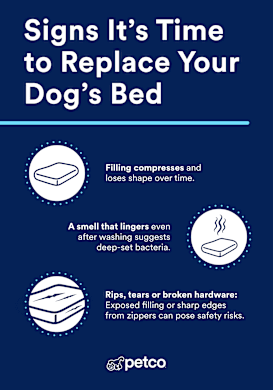
- Loss of shape or flattening: Filling compresses over time. A bed that no longer springs back often fails to support joints.
- Persistent odor: A smell that lingers even after washing suggests deep-set bacteria. This is a good indicator that it’s time to say goodbye. As an aside, you never want someone to walk in your home, sniff and do that scrunchy face.
- Rips, tears or broken hardware: Exposed filling and sharp edges from zippers are safety risks.
- Parasite infestation: Fleas or mites in bedding require immediate replacement of your dog’s bed. “Do not pass Go,” throw it out immediately and partner with your vet for appropriate parasite treatment for your pet, home and yard.
- Size mismatch: Dogs who have outgrown their bed probably aren’t resting comfortably. Also, two dogs who like to sleep together may benefit from a single bigger bed.
- Changes in physical needs: Older pets and dogs recovering from injury may need orthopedic support that the old bed cannot provide.
Behavioral signs to watch for:
- Avoidance: If your dog avoids the bed or rests elsewhere, like on the couch or (gasp!) even the floor, their bed may need replacing.
- Restlessness: Pacing, repositioning or failing to settle in can sometimes be solved with a new bed. Excessive pacing and failure to settle, however, should be discussed with your veterinarian to ensure an underlying health issue isn’t causing this behavior.
4-step self-assessment
If you aren’t sure if the bed is past its prime, try this 30-second test:
- Press the center: Does it spring back?
- Smell the seams: Any persistent odor?
- Are there stains or is the fabric torn?
- Is your dog still lying on the bed or has use dropped off?
Step-by-step maintenance
When you do get a new bed, you’ll want to help it last as long as possible. A consistent cleaning routine helps preserve comfort, control odor, maintain hygiene and reduce allergens. Below is a simple system you can follow.
How often to wash a dog bed
Determine what “regular” means for your dog:
- Weekly wash: Ideal for large, heavy-shedding dogs who like to get muddy or spend a lot of time outdoors. The AKC emphasizes more frequent washing for high-shedding and high-activity dogs.
- Every 2 weeks: Best for smaller and mostly indoor dogs, as well as very low shedders.
Machine-washable beds/removable covers:
- Remove the cover and read all care tags.
- Wash on a gentle cycle in warm water.
- Choose a pet-safe detergent that is fragrance-free and hypoallergenic. While “Ocean Breeze” might smell nice to you, your dog’s super sniffer will be overwhelmed. Optionally, add ½ cup of white vinegar during the rinse cycle to help safely neutralize odors.
Nonremovable covers/whole-bed wash:
- If you have a top-loader and the entire bed fits in your washer, throw it in the machine with gentle detergent.
- For hand-washing, submerge in a tub with mild detergent and rinse thoroughly to prevent skin irritation.
Spot clean
Spot cleaning helps manage stains and odors between washes:
- After muddy outings
- Whenever you notice small stains or odor patches from urine and other waste materials.
How to spot clean:
- Vacuum up loose debris and fur.
- Mix pet-safe cleaner and water in a spray bottle (enzymatic cleaners are excellent for organic stains).
- Spray gently on the affected area.
- Blot with a clean cloth until the stain lifts.
- Rinse lightly with a damp cloth and blot dry.
- Let the bed air-dry fully before use to prevent mildew.
Trusted products:
- Simple Green Pet Stain & Odor Remover
- Enzymatic sprays for urine and other bodily fluid cleanup
Petco carries a variety of pet-safe cleaners and tools that make routine care easier and safer.
Weekly and monthly inspection
Weekly tasks:
- Vacuum with an upholstery attachment to remove fur and dander.
- Air the bed outdoors in sunlight or a breezy area to reduce bacterial buildup; the sun can kill certain kinds of bacteria.
Monthly tasks:
- Perform a deep wash.
- Inspect zippers, seams and internal filling for clumping or flattening.
- Conduct a multi-area sniff test to detect lingering odors.
- Check cushioning at the center, corners and edges. If they’ve flattened, you know that can’t be comfy.
Rotation tip: Keeping two beds in rotation helps reduce wear and ensures your dog always has a clean place to rest; drying might take longer than you think.
Special considerations and safety tips
- Even the CDC has weighed in on this topic, stating pet items should be cleaned and disinfected regularly. You can read more of their tips for cleaning pet bowls and litter boxes.
- Avoid harsh chemicals and essential oils. Use mild, fragrance-free detergents to help prevent irritation. Again, that super sniffer would not appreciate the scent overload.
- If your dog has fleas or a skin infection, increase washing frequency and disinfect the surrounding area. Partner with your vet to determine appropriate treatment for your pet and your home during any type of infestation or infection.
- Use a vacuum with a HEPA filter when possible to more effectively remove allergens.
For replacement covers, detergents and new dog beds, Petco offers plenty of options.
What to do with old dog beds
When a bed no longer meets your own dog’s needs, there are multiple ways to responsibly dispose of it or give it a second life.
Donation and upcycling options
Donate: Contact your local animal shelters or rescue organizations to see if they accept used beds. Some may take gently used items if in clean, usable condition. If so, wash and vacuum it thoroughly before donating.
Upcycling
- Use the outer cover or fabric to make pet toys. Stuffing from the old bed can become filler for toys. Either way, the same washing and vacuuming steps apply.
- Turn the base or cushion into a mat for your dog’s crate or to use in outdoor spaces, their doghouse or even in the garage if your dog likes to hang out there.
- Use undamaged foam or filling for DIY projects (e.g., as padding under new cushions or in repurposed pillows).
Safe disposal for worn-out beds
If the bed can’t be donated or repurposed, there are a few ways to dispose of it that are better than just tossing it in a dumpster.
Recycling
- Check whether local textile recycling programs accept foam or soft goods.
- Some pet brands and retailers offer take-back programs for old beds.
Disposal
- Put severely damaged or infested beds in tied-up trash bags.
- Double-bag flea-infested beds to prevent spreading.
Eco-friendly options
- Compost natural materials (natural fiber filling, for example) if your local guidelines allow it.
- Repurpose clean pieces and discard the rest responsibly.
Takeaways
A consistent cleaning and inspection routine helps your dog’s bed stay comfortable, supportive and hygienic. Watch for signs of when to replace your dog’s bed,including persistent odor, loss of shape, tears and your dog avoiding the bed. Establish a simple care schedule with regular washing, weekly spot cleaning and monthly inspections. Pick a day and date to help keep it consistent, like “Washing Wednesday” or the first Saturday of the month.
In George Orwell’s Brave New World, they say, “Ending is better than mending.” That applies here, too. When a bed finally reaches the end of its life, donate what you can, repurpose what is usable and recycle or dispose of the remainder safely.
If you discover during your check that the bed is past saving, visit Petco for a replacement that fits your dog’s size and health needs. A clean, supportive bed is one of the simplest ways to support better rest and overall wellness.